

Double Bunk Beds Top and Bottom
Bunk beds can add storage, style and function to a room for kids. A lot of these sets can be converted into separate beds so that they can adapt to your child, and provide a reliable sleeping option.
Be aware that bunk beds need a high ceiling. You want to make sure there's enough headroom to get into and out of the bed without danger.
Size
Double bunk beds that are top and bottom come in different sizes, so it's crucial to assess the space in your room before you buy. You should also take into consideration the height of your ceilings as the size of your bunk bed will affect its safety and comfort.
If your ceilings are high, you may think about a lofted bed which can be split into two twin beds. This will let you free up space in your room and give each child a own bedroom that is theirs to use for sleepovers and parties. Some lofted beds come with built-in storage drawers. These can be useful in the event that your floor space is small.
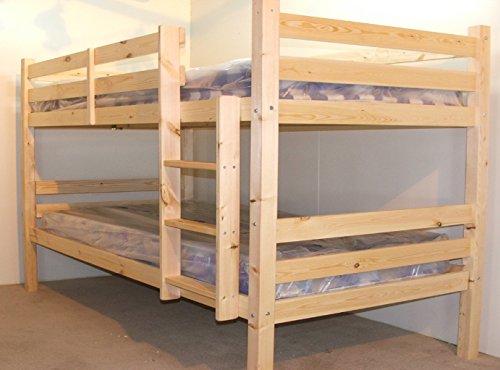
The type of staircase or ladder that will be used with the bunk bed is an additional factor to consider. The majority of bunk bed designs use a straight ladder, while others may feature an angled ladder or a staircase with handrails. Both options are safe and simple for kids to climb, but the type you pick will be determined by how much floor space is available in your space. Straight ladders are less space-consuming, but stairs offer additional safety features such as handrails, storage and built-in storage.
The size of the mattress on the top bunk should be taken into consideration. It is important to ensure that the mattress on your top bunk isn't overly thick, as it could cause a sleeper to fall off the bunk and hurt themselves. The majority of bunk bed manufacturers recommend that you choose a twin-size or full-size mattress on the top bunk, and a twin XL or twin-size for the bottom bunk.
You should also consider the age of your kids when choosing a bunk bed. Children younger than six years old shouldn't be sleeping on the top bunk, as they can easily slip off and harm themselves. Set firm guidelines for your children and ensure that they adhere to them.
You should also teach your kids to use the ladder correctly and to not hang anything from the guard rails of the top bunk, including scarves or belts. You should make it clear to your children that the top bunk is not to be used as a play area. These items can cause strangulation risks. It is also possible to install an illuminated clip on the ladder which can help your kids to navigate back down the stairs after dark.
Style
Bunk beds are available in various styles. Some offer a traditional look, while others provide a relaxed rustic feel. Other options have a direct clean design that could be perfect for a bedroom. Whatever style you pick be sure to keep safety always paramount. Make sure you place the bunk beds in a way that your children don't run against each other while moving from and into the bed. Make sure that the bunk beds are far enough away from lights, ceiling fans, heaters, blind cords (which could strangle your child), and windows.
Bunk beds come in different styles and colors. Some bunk beds feature an attractive wood grain while others are painted in a variety of shades, ranging from neutral stone to vibrant blue. The wood finish can also affect the overall appearance of the bed. It's therefore important to consider the color scheme of your child's bedroom when you choose the bunk bed.
If you want your kids their bunk bed to expand with them, consider one that can be divided into two twin beds that can be freestanding when they're ready to move to the teen years. This design by Harper & Bright is a great option and comes in several beautiful painted finishes, as well as in rich walnut.
Many parents opt for a double bed with stairs to ensure that their children are able to climb up and down the ladder to the top of the mattress. If you have kids who aren't quite ready to climb the stairs There are plenty of other options. For example this twin over queen bunk bed from Harper & Bright can accommodate three mattresses and offers a pull-out trundle with a convenient trundle design that fits a single mattress in the space of one rail.
Whatever style you pick, make certain that your children know that the top bunk is to be used to sleep. This rule should be reinforced frequently, particularly when guests come in and are inclined to sleep on the top bunk. Also, make sure that you are able to enforce the safety rules when your children have a sleepover.
Safety
While bunk beds may be fun and exciting however, there are certain safety issues that need to be considered. It is important to follow the guidelines set forth by the manufacturer of your bunk bed and frequently check for any missing or loose parts. It is crucial to ensure that the frame of your bunk bed is sturdy and secure, particularly when using the uppermost sleeping space. Children should not be allowed to play on the top bunk, and they must be taught that only one person is allowed to sleep there at any one time. It may seem difficult to enforce this rule, but it's necessary for their safety.
Another important safety precaution is to make sure that the mattress in the top bunk is properly fitted. The mattress on top should not be more than 15cm and should be snugly seated within the rails that guard the bunk bed. A mattress that is more deep could cause the side guards of the bunk bed to deflect from the wall. This could result in an unintentional fall from the bed. Similarly, the mattress on the bottom of the bunk should be supported by slats or wires that run directly underneath and secured securely at both ends. If the mattress was held up by the bed frame or slats, it may fall to the bottom bunk causing injury to the child.
Lastly, it is important to have a ladder that permits your child to climb into the top bunk in a safe manner. Many manufacturers offer ladders that are angled, which are more stable as opposed to the traditional vertical ones. They are great for younger children, and you need to consider using a flashlight at night to help your child locate the ladder in the dark.
The most frequent accidents that happen to bunk beds are falls and more than a quarter of these occur in children under the age of six. Children who aren't old enough to lie on top bunks can get injured from falling during naptime, or while playing. Fortunately, most of these falls can be prevented with the use of a few basic safety measures. It is also a great idea to put guardrails on the sides of the upper bunk and a fitted sheet that covers the entire top bunk.
Mattress
Bunk beds can be ideal for roommates and families who have limited storage space or living space. By stacking 4 sleeper bunk beds or three beds on top of each other, they allow for the comfort of sleeping for up to three people in one room. These fun, space-saving frames can accommodate twin or full-size mattresses and can be paired with storage options such as drawers and trundles to maximize the space available for sleeping.
The mattress's size and thickness can have a huge impact on how well the bunk bed will fit in your space, so it's important to take accurate measurements prior to buying. The thicker your bunk bed mattress is it, the more space will be between the sleeper and the ceiling. You should also select a mattress that is the right height for the top bunk, so that you can utilize the guardrails and get into and out of bed in a safe manner.
If you opt for a more substantial mattress for the top bunk it's recommended to select a smaller trundle that can fit in the lower frame so that there's more headroom between the lower and upper beds. This will reduce the chance of hitting your head when you're reading or getting ready for the night, and also make it easier to change out the bedding and switch between mattresses.
There are many different types of mattresses you can choose from for your bunk beds, including innersprings, hybrids, latex and memory foam. A memory foam mattress is ideal for the top bunk since it's designed to fit the body, and eliminate pressure points. It is also lighter than other types bunk bed mattresses. This can help reduce the risk of overheating during warm nights.
If you're looking for a long-lasting and affordable alternative, a coil mattress could be the best option. These mattresses are made of springs made of metal that provide a supportive base for the bunk, and they're typically less expensive than other types of bunk mattress. They're also a great option for older kids and teens who may require more support when sitting up in the bed to study or play games.